

Blog List

25
June
Protect Your Heart, Not Just Your Sugar: Heart Health Checklist for Diabetes
Understanding the Hidden Risk
Diabetes is a chronic condition that affects how
your body processes blood sugar. But what many people don’t realize is that
diabetes doesn’t just affect glucose levels—it has a powerful effect on your
heart and blood vessels too.
In fact, individuals with diabetes are 2 to 4 times more likely to
experience cardiovascular events such as heart attacks, strokes, or heart
failure [1]. This is why major international guidelines, including those
from the European Society of Cardiology (ESC) and the American Diabetes
Association (ADA), emphasize the importance of monitoring not just blood
sugar—but also cardiovascular risk markers.
Knowing your heart health numbers can help protect your future.
Why Knowing Your Numbers Is So Important?
Cardiovascular disease (CVD) in diabetes is often silent. You may not experience any warning signs until the damage is already done. That’s why proactive monitoring of specific health metrics is essential. These numbers help your healthcare provider assess your risk and decide if further action or lifestyle adjustments are needed.
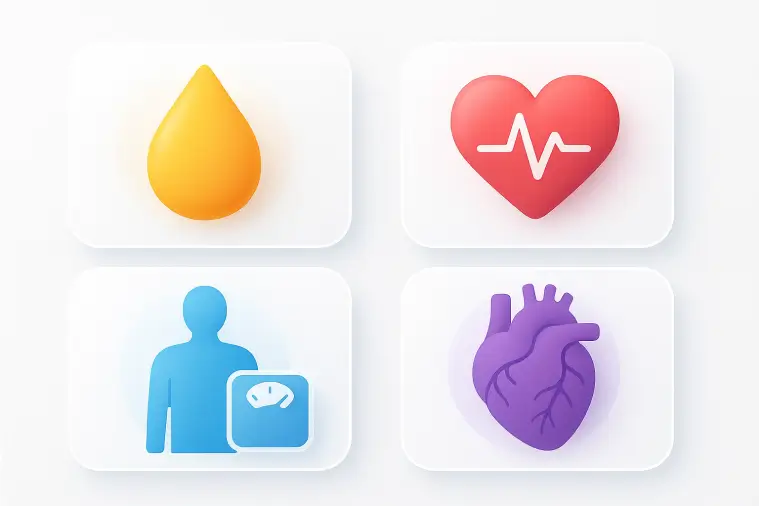
Decode Your Heart Risk: The 4 Numbers That Matter Most
1. LDL Cholesterol (“Bad” Cholesterol)
LDL cholesterol contributes to the buildup of plaque in your arteries, a process known as atherosclerosis, which can lead to heart attacks and strokes
- Target: For individuals with diabetes and high cardiovascular risk: LDL < 70 mg/dL
- How to measure: Through a fasting lipid panel, typically done every 6 to 12 months
- Why it matters: Lowering LDL significantly reduces cardiovascular events in diabetes
2. Blood Pressure (BP)
High blood pressure increases the workload on your heart and can damage blood vessels over time
- Target: < 130/80 mmHg
- How to measure: Regular readings at the clinic, pharmacy, or home using a validated BP monitor
- Why it matters: Tight blood pressure control reduces the risk of heart attacks, strokes, and kidney disease
3. Body Mass Index (BMI)
BMI is a measure of body weight relative to height and is used to classify weight status
- Target: 18.5–24.9 (normal weight range)
- How to measure: Online calculators or clinic-based height/weight measurement
- Why it matters: Higher BMI is associated with increased insulin resistance and cardiovascular strain
4. ASCVD Risk Score
The Atherosclerotic Cardiovascular Disease (ASCVD) risk score estimates your 10-year likelihood of having a cardiovascular event
- Target: No universal target, but a lower score is better. Discuss personalized goals with your doctor
- How to calculate: Calculated during your doctor visit using blood test results and clinical history
- Why it matters: Helps guide treatment plans including when to start cholesterol-lowering therapies or lifestyle changes
How Often Should You Check These Numbers?
| Metric | Recommended Frequency |
|---|---|
| LDL Cholestero | Every 6–12 months |
| Blood Pressure | Every clinic visit or at home weekly |
| BMI | At every routine check-up. |
| ASCVD Risk Score | Annually or with health changes |
Regular monitoring ensures early detection of risks, allowing timely adjustments to your care plan

Leveraging Digital Tools to Stay on Track
Today’s technology can make managing your numbers easier: Mobile Apps and Wearables Can Help You
- Track and log your blood pressure and weight
- Store your lab results
- Set reminders for routine checkups or blood tests
- Share data with your healthcare provider securely
Many apps are designed to integrate with home blood pressure monitors, smart scales, or your doctor’s portal. Ask your clinic if they recommend a specific platform that aligns with your care plan.
“Know Your Numbers” Summary Chart
| Metric | Target | Why It Matters |
|---|---|---|
| LDL Cholestero | < 70 mg/dL | Prevents plaque buildup and heart attacks |
| Blood Pressure | < 130/80 mmHg | Protects your heart, brain, and kidneys |
| Body Mass Index (BMI) | 18.5–24.9 | Supports overall metabolic health |
| ASCVD Risk Score | Personalized | Guides treatment and prevention strategy |
Tip: Save these targets in your health app or print them to keep in your diabetes journal.
Your Next Steps
- Ask your healthcare provider for your latest numbers at your next visit.
- Write them down or save them digitally.
- Track changes over time and discuss progress or concerns with your care team.
- Adopt heart-healthy habits like regular exercise, balanced nutrition, and stress management.

Reference:
- 1. American Diabetes Association Professional Practice Committee. Cardiovascular Disease and Risk Management: Standards of Care in Diabetes—2024. Diabetes Care. 2024 Jan;47(Suppl 1):S179–S218.
- 2. Marx N, Federici M, Schütt K, et al. 2023 ESC Guidelines for the management of cardiovascular disease in patients with diabetes. Eur Heart J. 2023 Oct 14;44(39):4043–4140.
- 3. Schütt K, Federici M, Verket M, Marx N, Müller-Wieland D. The '10 commandments' for the 2023 ESC Guidelines for the management of cardiovascular disease in patients with diabetes. Eur Heart J. 2024 Apr 14;45(15):1298–1300.
- 4. Grundy SM, Stone NJ, Bailey AL, et al. 2018 AHA/ACC Guideline on the Management of Blood Cholesterol. Circulation. 2019 Jun 18;139(25):e1082–e1143.
- 5. Whelton PK, Carey RM, Aronow WS, et al. 2017 ACC/AHA Hypertension Guideline. J Am Coll Cardiol. 2018 May 7;71(19):e127–e248.
- 6. Garvey WT, Mechanick JI, Brett EM, et al. AACE Comprehensive Clinical Practice Guidelines for Obesity. Endocr Pract. 2016 Jul;22(Suppl 3):1–203.
- 7. Arnett DK, Blumenthal RS, Albert MA, et al. 2019 ACC/AHA Guideline on the Primary Prevention of Cardiovascular Disease. J Am Coll Cardiol. 2019 Sep 10;74(10):e177–e232.
02 Comments
Kevin martin
March 20, 2023 at 2:37 PM
Neque porro est qui dolorem ipsum quia quaed inventor veritatis et quasi architecto beatae vitae dicta sunt explicabo. Aelltes port lacus quis enim var
Sarah albert
June 10, 2023 at 10:00 AM
Moving the goalposts sorry i was triple muted, so what do you feel you would bring to the table if you were hired for this position. A better understanding